
Searching the Halifax County Court Docket
Start your Halifax County court docket search at the North Carolina eCourts Portal. Halifax moved onto the statewide Enterprise Justice system on April 28, 2025. Portal has been the public route since. It reaches whatever Halifax case information is available online. Smart Search is the tool for finding a public Register of Actions. The system also calls that a Case Summary. Search Hearings does something different. It points you to a current setting rather than the full case record. Keep in mind that Portal helps you find and read a public docket. The court's official record lives elsewhere.
Bring a case number if you can. Without one, start from a party name. Narrow things down by Halifax location, case type, status, or filing-date range. For an infraction or traffic matter, a citation number often works as the identifier. A broad result is a warning sign. Use the Portal filters instead of assuming every similar name is your case. A public entry can be incomplete, still processing, restricted, or even belong to another county.
- Open Portal and select Smart Search for a public Halifax County Case Summary.
- Enter a case number or party name, then use Advanced Filtering Options to select Halifax and narrow the case family.
- Open the linked case number and read the Register of Actions in date order.
- Use Search Hearings, the official court-date service, or a local calendar to check a current setting.
- Ask the Halifax County Clerk of Superior Court for an official copy, certificate, or file review when needed.
Note: A search result only starts the hunt for a public record. It does not prove that every document or the latest setting is available online.
Halifax County Portal Search Fields
Per Judicial Branch Portal training, Smart Search is a statewide tool. It has a Halifax location filter. It is not its own county database. The search starts with a case number or a party name. From there you can narrow by case type, status, filing date, citation number, attorney information, or other criteria the chosen search type supports. That shared design matters here. Halifax County's Superior and District Court records sit in one court system under one clerk. The same search reaches both.
| Portal field | Useful Halifax County use | Important limit |
|---|---|---|
| Basic Search Criteria | Enter a case number or party name. | A name alone can return more than one case. |
| Location | Select Halifax to reduce statewide results. | It is an optional filter, so confirm it is set. |
| Case Type and Status | Narrow civil, criminal, estate, or special-proceeding searches. | A status that does not fit the case type can exclude a result. |
| Filing Date Range | Limit a broad name search to a likely period. | It does not replace an exact case number. |
The Halifax County Judicial Branch location page lays out the court-service routes behind that search: calendars, contacts, local rules, payments, and eCourts information. The Judicial Branch public data portal publishes the Halifax County court docket data shown in the county breakdown that follows.
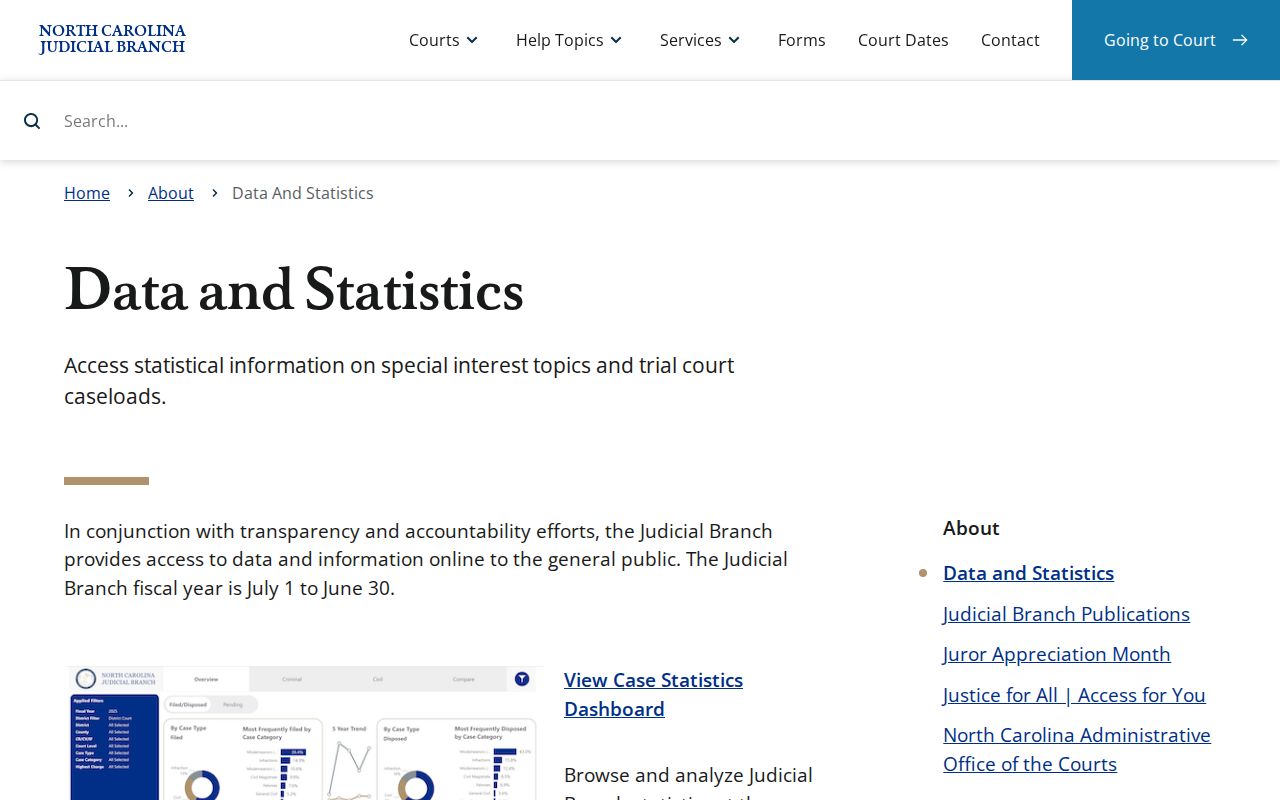
That Halifax County court docket image traces back to the Judicial Branch public data portal. Aggregate public data answers system-wide questions. A case-level Case Summary answers questions about one matter. For a particular case record, use Portal or the Clerk.
Inside a Halifax County Court Docket
Portal labels the chronological public case record as a Register of Actions or Case Summary. It can list the case number, court assignment, parties, attorneys, case events, hearings, dispositions, financial information, and a civil cause of action where one applies. The contents depend on the case. Every block is conditional. A public case may show no hearing. It may lack a financial section or a document image entirely. Read the dates in order. Also tell apart a scheduled event from the later action that changed or resolved it.
| Case Number | The file identifier. Enter it exactly as issued; a Portal guide example is 01CR123456-100. |
|---|---|
| Assignment | Available court or location information that helps place the Halifax County case. |
| Case Events | Dated actions such as a filing, hearing, payment, order, transfer, or disposition activity. |
| Hearings | Available scheduled events. Confirm a present setting through the newest entry or court contact. |
| Disposition | The recorded outcome or status at a stage. It should be read with the entries that explain it. |
| Documents | Only material publicly available to that Portal user. The Clerk supplies official copies. |
A hearing entry means the matter got a spot on the calendar. Nothing more. It does not establish that the hearing occurred. It does not show that the case ended or that a signed order exists. The official Portal FAQ draws the same line: Portal is not the official court record.
Halifax County Case Summary Terms
A Case Summary reads easier once you split it into parts. A case event is a dated system action. A hearing is a scheduled court event. A disposition is the recorded outcome at that stage of the case. Even a case marked disposed deserves a closer look. The label alone never tells the whole story.
- Case Summary / Register of Actions
- Portal's public chronological index of available case activity.
- Continuance
- A postponement granted for good cause under the applicable rule.
- Reset
- A later setting that replaces or changes an earlier hearing.
- Cleanup calendar
- A Halifax Superior civil review for matters with service, progress, or closure concerns.
- Transferred to Superior Court
- A status showing movement from a lower court path to the Superior division.
Older converted events sometimes carry a 12:00 AM time in Portal. The official user guide calls that a conversion artifact. It marks events that predate an Odyssey go-live. It is not a literal midnight court event. Halifax County's 2025 conversion makes the detail worth knowing. Old history often sits beside newer eCourts entries. The statewide North Carolina eCourts overview is the source for the Halifax County court docket data presented alongside this section.
This Halifax County court docket image comes from the North Carolina eCourts overview. Enterprise Justice, Portal, and File & Serve are related services under one umbrella. Still, public reading access and official certification remain separate functions.
Courts That Keep Dockets in Halifax County
North Carolina runs a unified General Court of Justice. Halifax County's general-jurisdiction trial court is Superior Court, General Court of Justice, Superior Court Division, District 7A. The Halifax County Clerk of Superior Court also maintains the District Court record system for District 7. That shared records route shapes how you search. A county lookup starts with the statewide Portal and the Clerk, not a separate city court site.
| Court | Docket covers | Where to search |
|---|---|---|
| Superior Court District 7A | Felonies, major civil matters, jury and grand-jury sessions, and authorized higher-court paths. | Portal, the Halifax Clerk, and official Superior schedules. |
| District Court District 7 | Misdemeanors, infractions, traffic, municipal-ordinance cases, small claims, family, and assigned matters. | Portal, the Halifax Clerk, and civil or criminal calendars. |
| Magistrate functions | Limited initial proceedings, bonds, and small-claims functions within District Court. | Records flow through the Halifax Clerk, not a separate docket archive. |
The Judicial Branch describes the statewide roles of Superior Court and District Court. One wrinkle: a District Court misdemeanor appeal can open a new Superior Court trial path. So a single case history may show activity at more than one level.
Halifax County eCourts Docket Shift
Halifax County joined eCourts Track 8 on April 28, 2025. The launch notice confirms the move to Enterprise Justice, Portal, and eFiling. Older routines were built around the mainframe and paper indexes. Those gave way to one statewide public interface. The Clerk of Superior Court still keeps the official file. So the Halifax County court docket you see in Portal reflects a real conversion. Older events can look different from current entries simply because of that history.
Attorneys file through North Carolina File & Serve. A filed item does not become a public document image on contact. New events take time to process. A public Case Summary can leave out restricted material. Certified copies still come only from the Clerk. The Judicial Branch Clerk transition announcement explains that page. It covers Halifax County court staffing and the docket record.
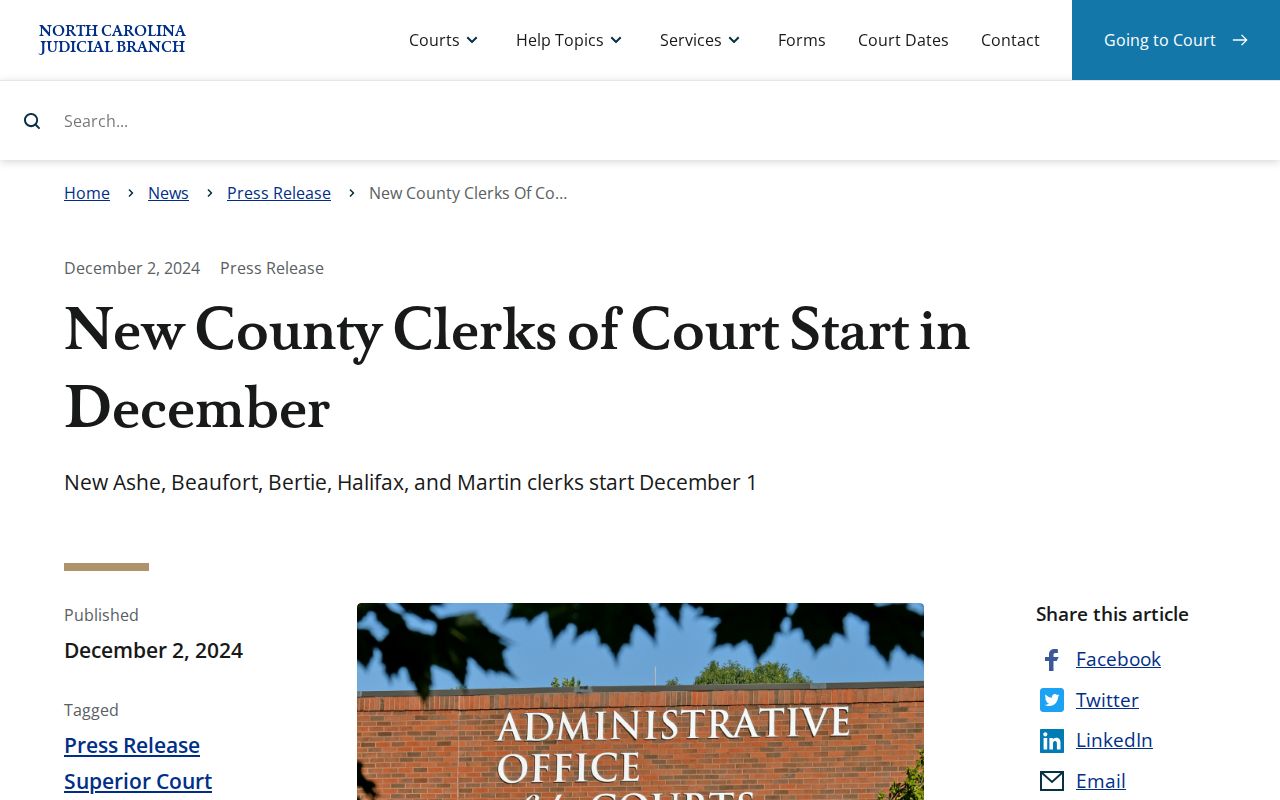
Clerk transition: The Judicial Branch announcement covers staff changes in Halifax County. Court personnel come and go. Through all of it, the Clerk of Superior Court stays the office answerable for the county's official court records.
How to Find Court Dates and Settings
One channel is rarely enough when a Halifax County court date matters. Portal's Case Summary may list an available hearing. Portal Search Hearings lets you filter by location, hearing type, and date range. The county landing page also routes you to official civil and criminal calendar results. An older web return can conflict with a newer case notice or court order. If so, the newer paper controls.
Halifax Superior scheduling uses local terms worth knowing. Published sessions include several types. These are Criminal Jury / Grand Jury, Criminal Administrative, Civil, Civil (Med/Mal), and Murder Status. Those labels organize court time. They do not promise every listed case will be reached at a given hour. Something may look off. Read the later docket entries first, then call the right court office or the Clerk with the case number handy.
A calendar line is a scheduling signal, not a final case disposition. The Halifax County Judicial Branch page shows the official listings. Those hearing and calendar results sit behind the Halifax County court docket view.
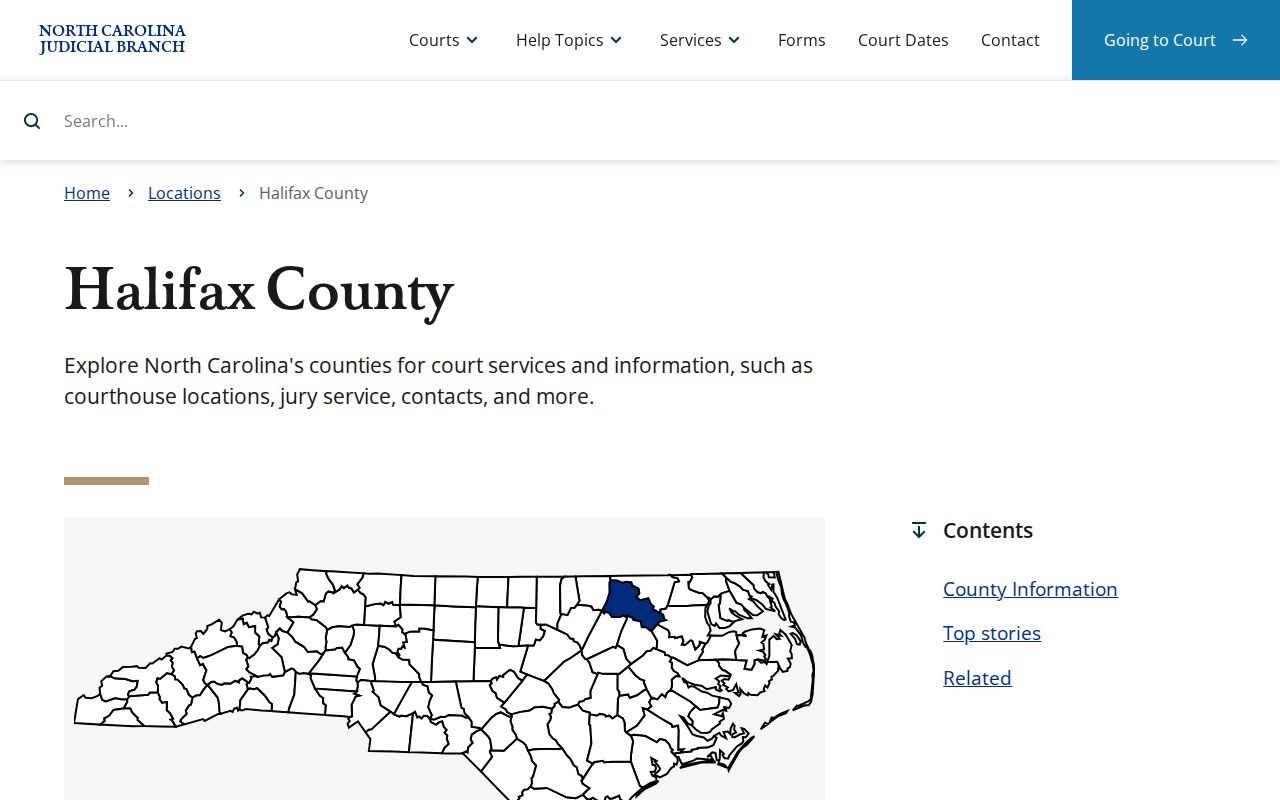
The Halifax County Judicial Branch page carries the county's official calendar and service links. Use those alongside the hearing data Portal returns case by case.
Halifax County Calendar Lines
Halifax Superior civil cases move through a set sequence. A matter may get an administrative notice, mediation or scheduling treatment, or a motion-calendar setting. A cleanup-calendar review can follow roughly 120 days after filing. The local rules and forms page lays out the county's current route for each step. A cleanup calendar can flag several things. These include lack of service, an unresolved settlement, an inactive matter, or a case that seems stalled.
Local rules also separate a trial calendar from a final order. Trial calendars are prepared before a term, and older cases normally get priority. Any listed matter can be settled, continued, not reached, or moved by a later order. A listing can change. The safe sequence is to find the latest Case Summary event, review the current hearing information, and confirm with the court coordinator or Clerk. Do that before treating an old calendar as final. The Halifax County Court Services page shows the county materials. Those sit behind the Halifax County court docket record.
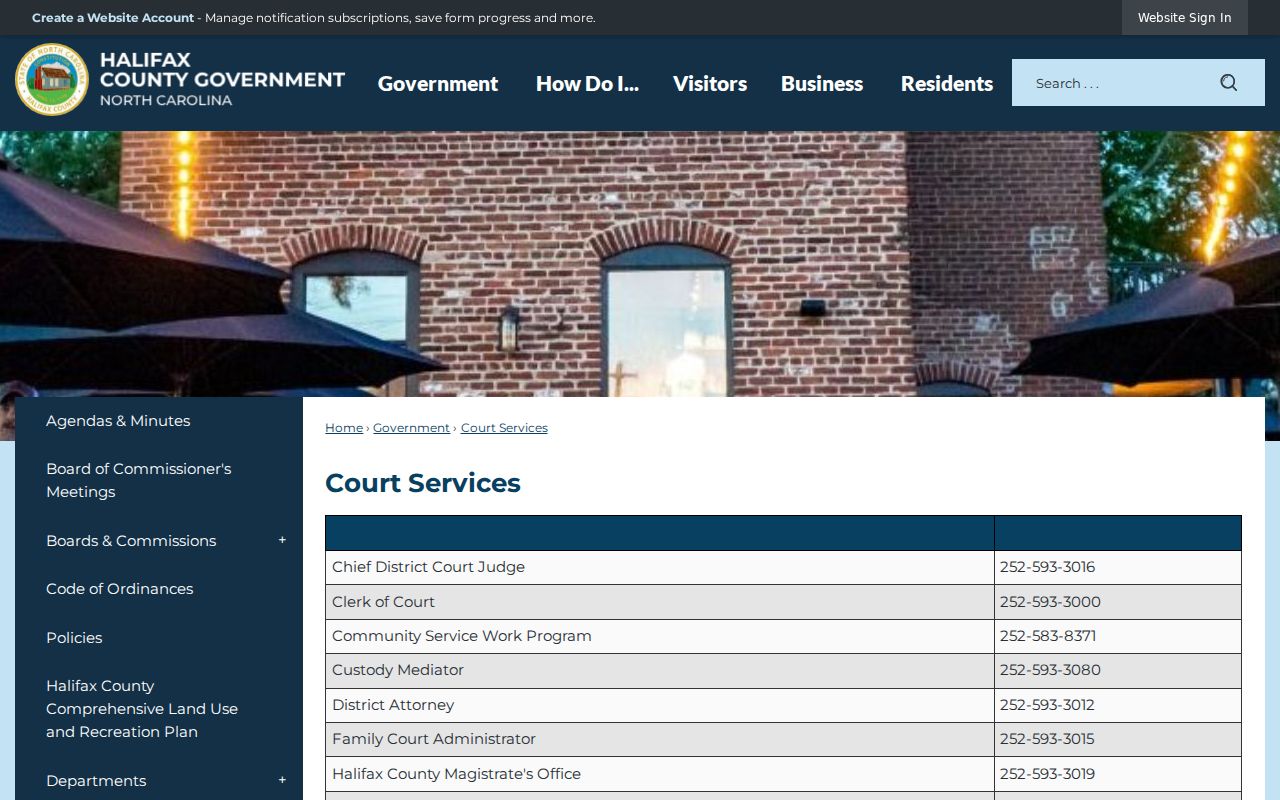
Halifax County Court Services posts the county courthouse material. That helps you place the setting. Case-level date confirmation stays with the court system.
Public Access to Court Dockets
Public access has limits. G.S. 7A-109 generally opens clerk records and indexes to inspection during regular hours unless another law restricts them. Portal makes public information easier to find. It does not release every filed item. Juvenile files, sealed material, expunged files, and other confidential records stay restricted even when a name or case history would otherwise be searchable.
Key Rules:
G.S. 7A-109 permits public inspection of clerk records and indexes except where law provides otherwise.
G.S. 7B-3000 withholds juvenile court records from public inspection except as law or court order allows.
G.S. 15A-151 treats expunged court files as confidential.
G.S. 132-1 states North Carolina's public-record definition and minimal-cost policy, subject to specific confidentiality laws.
A blank Portal return proves nothing about sealing. It can reflect an entry error, a search-format problem, a different venue, or a processing delay. It may simply mean no matching case. Recheck the identifier first. Then contact the Clerk if an official file inquiry is needed. The Census QuickFacts profile for Halifax County gives the county figures. Those appear alongside the Halifax County court docket record.
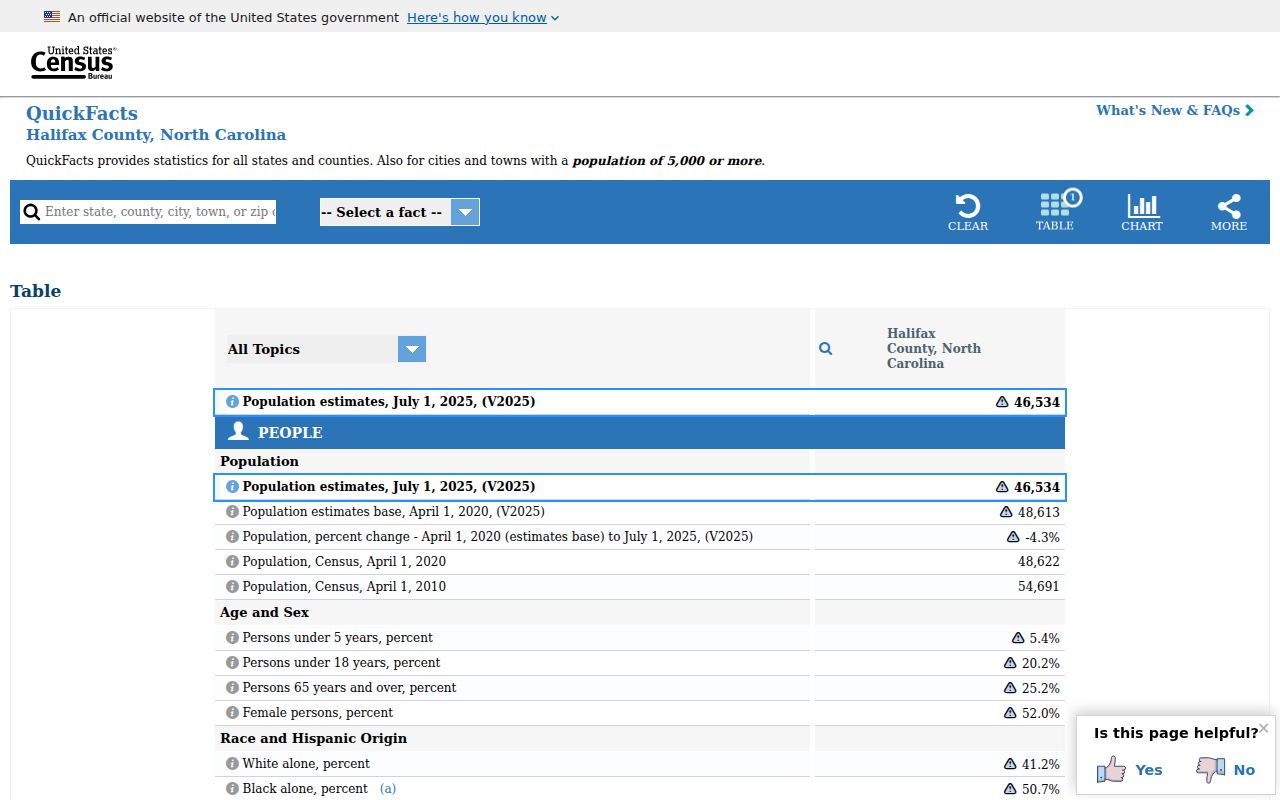
The Census QuickFacts profile for Halifax County supplied this Halifax County court docket image. Knowing how many people live in the county does nothing to loosen state-law limits on who may pull an individual court record.
Halifax County Clerk and Portal
Portal and the Halifax County Clerk of Superior Court split the work in different ways. Portal serves the public statewide. It lets a person pull a Case Summary, run a hearing search, handle eligible payments, and look up judgments. The Clerk keeps the official case record. That office opens the paper file where one exists and issues certifications and plain copies. Printing a Portal screen does not turn it into an official record. A Portal result still helps. It arms a person with the case number, year, and court before calling the Clerk for a document.
State guidance also allows self-service terminals in clerk offices. Those terminals reach criminal, civil, estate, and special-proceeding information. That makes an in-person visit to Halifax County a real fallback. It works when a document is missing online or a broader record check is needed. Even if the arrest or dispute started in one corner of the county, the docket route stays centralized.
The official Halifax County contact directory lists the offices behind the Halifax County court docket records below.
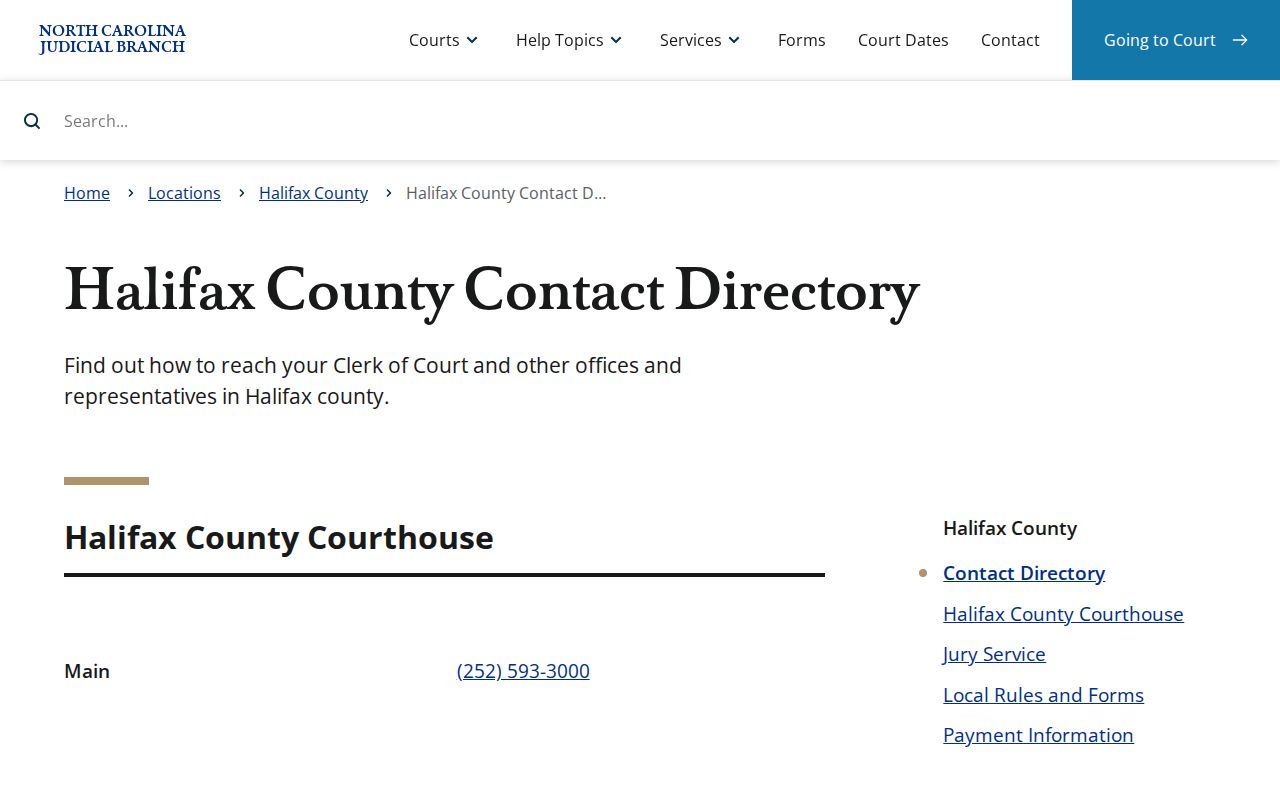
The official Halifax County contact directory backs the Halifax County court docket listing here. It sorts contacts by Clerk, judicial office, family court, prosecutor, and magistrate. That breakdown helps route a record question to the desk that can answer it.
Docket Records at the Clerk's Office
The Halifax County Clerk of Superior Court keeps the files. Both Superior and District Court records sit there. Head to the Halifax County Courthouse for active court records. That building is also called the Court Services Building. That is not the Historic Courthouse at 10 North King Street. The Judicial Branch publishes the Clerk's courthouse route. It covers official files, copies, and guidance on what Portal cannot supply. County payment information puts the Clerk's office on the first floor.
Halifax County Clerk of Superior Court
Halifax County Courthouse
357 Ferrell Lane
Halifax, NC 27839
(252) 593-3000
Monday through Friday, 8:30 a.m. to 5:00 p.m.
Official courthouse details are available from the Judicial Branch.
Copies in North Carolina carry set fees. The copy-fee statute charges $2.00 to prepare the first page of each copied document, $0.25 for each additional page or fraction, $3.00 for a certificate under seal, and $10.00 for exemplification. G.S. 7A-308 holds the current terms. A given document may be unavailable or fall under a separate rule, so confirm the request and the charge with the Clerk before ordering.
The official Halifax County Courthouse page supplies the Halifax County court docket details below.
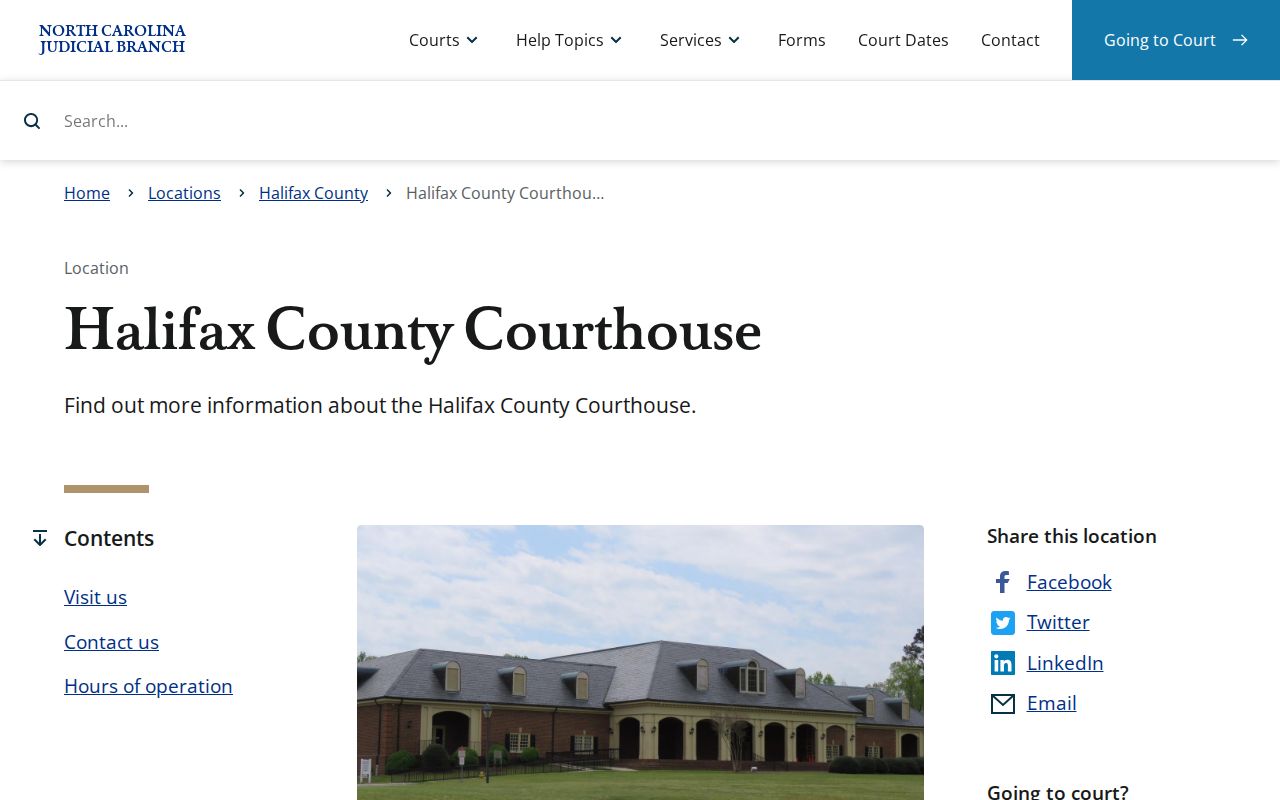
The official Halifax County Courthouse page backs this Halifax County court docket reference. It marks the current Judicial Branch location for the Clerk and trial-court services.
Halifax County Recovery Court Dockets
The Halifax Accountability & Recovery Court, or HARC, is a local specialty-court milestone. A state recovery-court report lists HARC as implemented in 2024. The Judicial Branch lays out its recovery-focused model: supervision, treatment resources, structured probation, and multidisciplinary review. The program can shape an underlying criminal case. It builds no general public HARC docket database.
When an underlying case is public, it moves through the same Portal and Clerk route. That route matches any other Halifax County criminal matter. Treatment details and restricted filings may stay out of public view. The official HARC milestone release describes the program. So does the statewide Adult Treatment Court page. Neither promises access to participant details.
The North Carolina certified county population estimates stand behind the Halifax County court docket figures below.
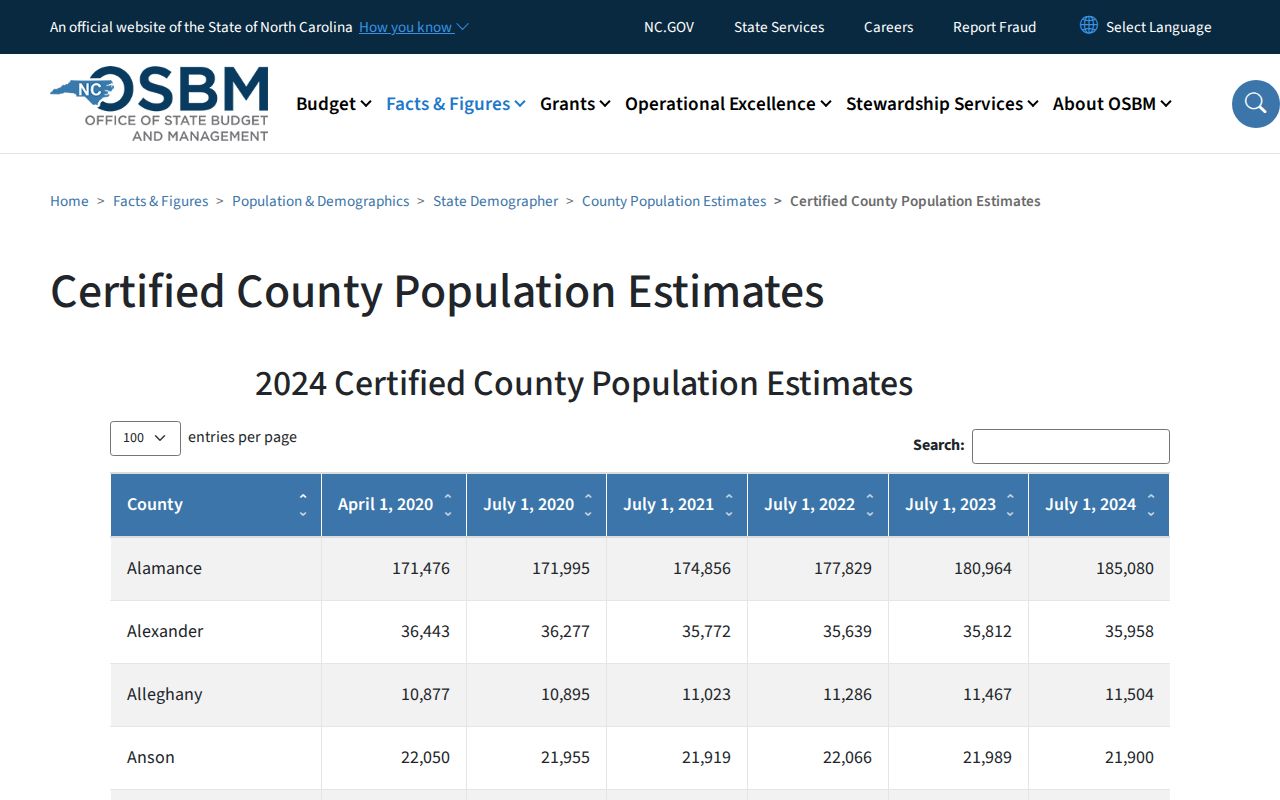
This Halifax County court docket context comes from the North Carolina certified county population estimates. Population figures sketch local scale. They prove nothing about a court filing total or the status of a case.
Halifax County Court Dockets by City
Halifax County holds seven incorporated municipalities. None of the five communities featured here runs its own municipal-court docket under North Carolina law. An eligible citation or ordinance prosecution lands in Halifax County District Court. The Clerk handles the record. This applies whenever Halifax County is the venue. A town's code or police page may explain local enforcement. Portal and the Clerk still provide the docket, hearing information, and official copies. Littleton needs extra care because it straddles Halifax and Warren Counties.
Roanoke Rapids Docket Search
14,592 residents, July 1, 2024 estimate. City code and police contacts are distinct from the state court record.
Enfield Docket Search
1,773 residents, July 1, 2024 estimate. Local ordinances lead to the Halifax court route when a state case is filed.
Scotland Neck Docket Search
1,638 residents, July 1, 2024 estimate. Police enforcement records are not a separate court docket.
Weldon Docket Search
1,393 residents, July 1, 2024 estimate. City billing and court payment are different systems.
Littleton Docket Search
535 residents, July 1, 2024 estimate. Confirm whether the citation belongs in Halifax or Warren County.
The Halifax County municipalities page names the county's incorporated places. A city label can describe where an event started. But the county printed on the citation or case documents fixes the court-record venue.
Halifax County Towns, One Docket Route
Roanoke Rapids, Enfield, Scotland Neck, Weldon, Littleton, Hobgood, and the Town of Halifax all sit within the county. Each is a distinct municipality. Their local pages do not build separate trial-court docket systems. A case filed in Halifax County follows one Clerk-centered route. District Court District 7 handles lower-court matters assigned by law. Superior Court District 7A handles general-jurisdiction work. Portal provides public Case Summaries and hearings that are available.
That single route guards against a common mistake. A city police or ordinance page may tell you where a citation began. It cannot certify a court record or tell you the current case setting. Littleton demands a venue check because it sits in both Halifax and Warren Counties. The county on the citation or case documents controls. It names the Clerk and court record.
Map and Directions to the Halifax County Courthouse
Clerk, Superior Court, District Court, family court, and prosecutor functions are all housed at the Halifax County Courthouse/Court Services Building, 357 Ferrell Lane, in the town of Halifax. The Clerk's Office is on the first floor. This is a different building from the county government's Historic Courthouse at 10 North King Street, which is a county-meeting location, not a court-records counter, so a docket visit should go to Ferrell Lane, not King Street.
Halifax County Courthouse
357 Ferrell Lane
Halifax, NC 27839
(252) 593-3000
Monday through Friday, 8:30 a.m. to 5:00 p.m.
The building is a three-level courthouse that has been undergoing a phased renovation and expansion, so counter routing and access conditions can vary during construction; calling the Clerk at (252) 593-3000 before a visit is worthwhile. No parking, security-screening, or ADA-device policy is published for the courthouse.