
Searching Halifax County Criminal Dockets
Halifax criminal Case Summaries are available through North Carolina eCourts Portal Smart Search. Halifax joined Portal and Enterprise Justice with Track 8 on April 28, 2025. Search by case number or party name. You can narrow results to Halifax, Criminal Actions, a status, or a filing date. A citation number may help you find an infraction or a related District Court matter. Remember that Portal is a public reference tool, not the official record.
Click a linked case number. That opens the Register of Actions, which is another name for the Case Summary. For a current setting, use Search Hearings rather than an older event line. The official Halifax criminal calendar offers another schedule channel. If nothing comes back, check the spelling, the number, the Halifax location, and any access restriction. Then ask the Clerk to check the official file.
- Open Portal Smart Search and enter the known case number or party name.
- Select Halifax and Criminal Actions in the filters when a broad result needs narrowing.
- Choose the linked case number and read the chronological Case Events.
- Open Search Hearings or the criminal calendar to confirm a current court setting.
- Contact the Halifax County Clerk of Superior Court for official copies or file access that Portal does not provide.
Halifax County Criminal Court Layers
Halifax criminal dockets operate inside a unified state system. Felonies belong with Superior Court District 7A. Misdemeanors, infractions, many traffic matters, and municipal-ordinance violations go to District Court District 7. One office serves both levels. The Halifax County Clerk of Superior Court is the practical records office. Magistrates handle limited initial functions, but their contacts are not separate criminal-record archives.
The official Halifax location page lists both trial-court districts and the local court-service routes. This layout explains a common dead end. A Roanoke Rapids or Enfield citation never leads to a city criminal docket website. The city may have issued the ticket. Yet the court record follows the Halifax venue and the state court system.
The PACER federal court access service is the source for this Halifax County criminal docket image.
A federal criminal case runs through PACER and the Eastern District of North Carolina, not the Halifax County criminal docket system. Portal and the Halifax Clerk cover only the county's North Carolina state-court cases.
Inside a Halifax County Criminal Docket
A public criminal Case Summary can show a case number, assignment information, parties, attorneys where filed, charge or offense material, Case Events, hearings, dispositions, and financial information when applicable. Not every field or document image is guaranteed. Think of it as a chronological account of available case activity. It is not a transcript and not a certified copy.
| Case and Assignment | Identifies the available file and court-location information. |
|---|---|
| Charge or Offense | Available criminal allegation information, which must not be treated as a final outcome. |
| Case Events | Dated activity such as charging, a hearing, order, payment, transfer, plea, or disposition event. |
| Hearings | Available scheduled court events. A later setting can replace an earlier one. |
| Disposition | Outcome data at a stage of the case; read it with the related events. |
| Financial Information | May appear when applicable, but does not replace the Clerk's official financial record. |
The Portal Advanced User Guide explains what each field means. A new charge, a bond event, and a later disposition are separate docket entries. Read just one and you can misstate the case history.
Halifax County Criminal Event Blocks
Portal sorts case material into blocks. That helps a searcher tell a scheduled event from a recorded action. Case Events is the dated history. Hearings lists available settings, and Dispositions is where a recorded outcome appears. A status like Disposed, Appealed, or Transferred to Superior Court only makes sense with the surrounding entries. Those come from that criminal docket.
- Arraignment
- A criminal court appearance concerning the charge and the defendant's response.
- Bond or release condition
- An available pretrial event concerning conditions of release, not a final case result.
- Continuance
- A postponement granted under the applicable court rule.
- Disposition
- The recorded result at a stage, which may follow a plea, trial, dismissal, or other action.
- Trial de novo
- A new Superior Court trial path following the kind of District Court misdemeanor appeal state law permits.
Halifax's Sixth-A bail policy supplies local terms such as written promise to appear, unsecured or secured bond, and supervised release. Those words can show up in a criminal case context, though the public Case Summary does not promise every pretrial detail.
The state Adult Treatment Court page is the source for this Halifax County criminal docket image.
Specialty-court participation can add context to an underlying Halifax criminal case. It does not create an alternate public docket for treatment details.
How a Criminal Case Moves
A criminal docket moves through recorded stages rather than one straight line. Expect filing or initial process, arraignment, pretrial activity, a plea or trial, a disposition, and sentencing. That is roughly the order. Any single Halifax County criminal case may add more hearings, a continuance, a transfer, an appeal event, or other variation. The Case Summary shows only the public events recorded for that file.
Filing → Arraignment → Pretrial → Plea or Trial → Disposition → Sentencing. That process line is a reading aid, not a prediction. A calendar entry may be moved, and a scheduled date does not state the result. For a live date conflict, Portal Search Hearings and the appropriate court office are more dependable than an old calendar line.
Note: A public charge or hearing entry is procedural information. Read it together with the later disposition in the actual case.
Halifax County Criminal Calendar Weeks
The published Halifax Superior Court schedule uses local session labels. Examples include Criminal Jury / Grand Jury and Criminal Administrative. These labels describe the court's planned session pattern. They do not promise that every case gets called, reached, or resolved that day. Portal's hearing return and the latest court notice remain the best tools for confirming an individual case.
The eCourts Track 8 launch notice is the source for this Halifax County criminal docket image.
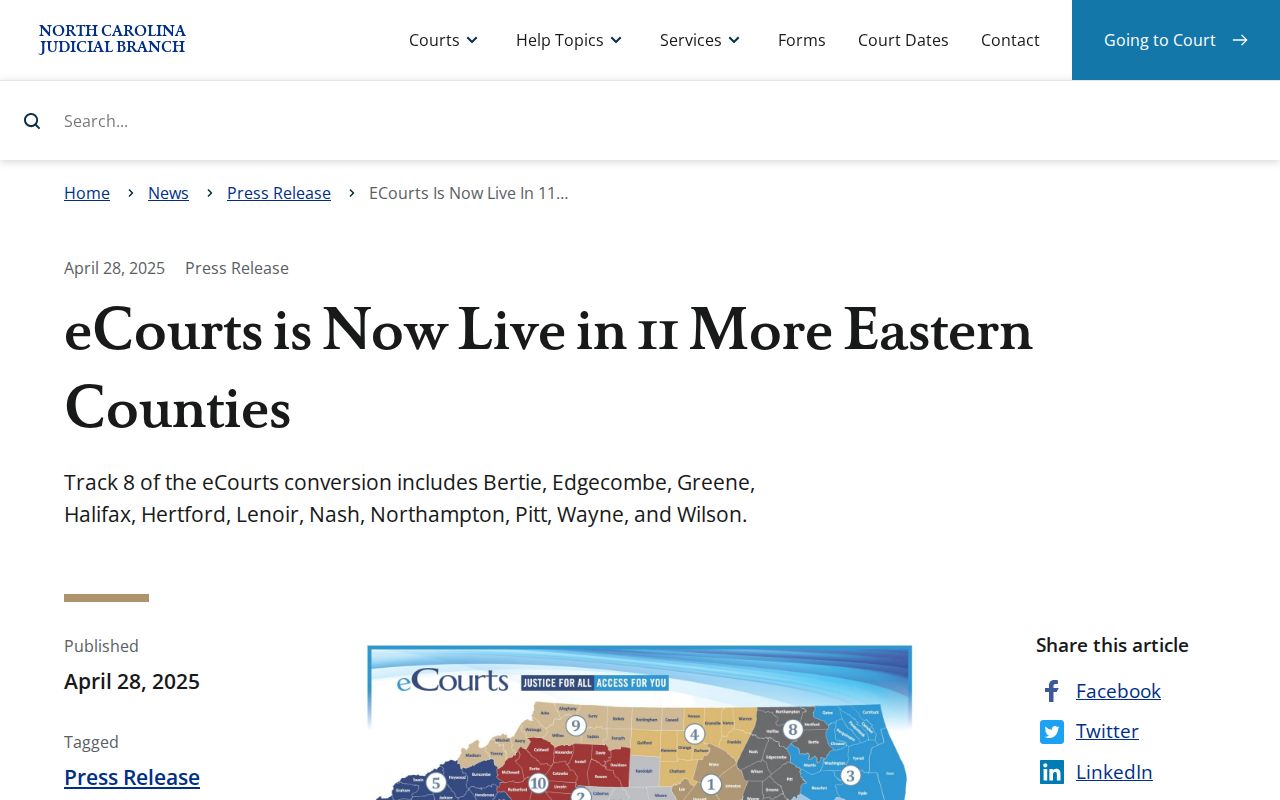
Since Halifax's 2025 eCourts launch, Portal has provided a common statewide interface. Official calendars and the Clerk remain necessary ways to verify a criminal setting.
Courts That Hold Criminal Dockets
Two court levels split the Halifax County criminal docket. District Court District 7A Superior... Correction: Superior Court District 7A holds the felony cases and the Superior criminal sessions. District Court District 7 gets everything below that: misdemeanors, infractions, traffic tickets, and municipal-ordinance violations. Those are the matters that fill most local dockets. The District Court description confirms the state assigns below-felony criminal cases and ordinance violations to District Court.
The Halifax Clerk keeps the official court record for both levels. One wrinkle matters for case lookup. A District Court misdemeanor conviction can be appealed to Superior Court for a brand-new trial, which creates a fresh docket entry at the higher level. That is a new trial, not a conventional appellate review of the District Court transcript.
Halifax County Recovery Court Cases
Halifax County launched its Accountability & Recovery Court, known as HARC, in 2024, per the state recovery-court report. The Judicial Branch frames it as a recovery program. It is built on intensive supervision, treatment resources, structured probation, and multidisciplinary review. That is a milestone for local criminal justice. Still, it does not change how you look up the case. The underlying court docket still follows the usual Portal, Clerk, and confidentiality rules. The official HARC milestone release supplied this Halifax County criminal docket image.
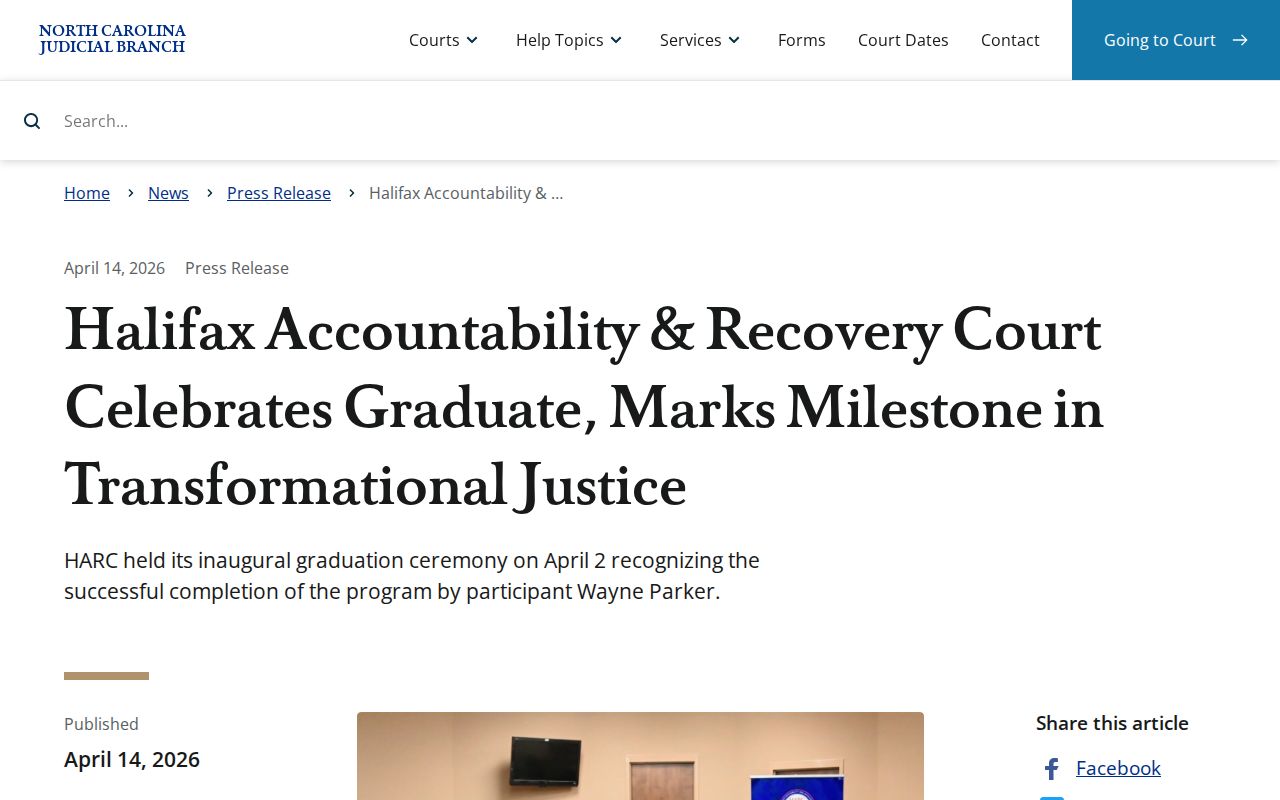
Treatment details and program participation can be restricted from public view. When you run a Halifax County case lookup on the underlying charge, stick to what is actually there: the Case Summary and the Clerk's court records. Do not assume the docket search will open up recovery-court files.
Sealed Dockets and Public Access
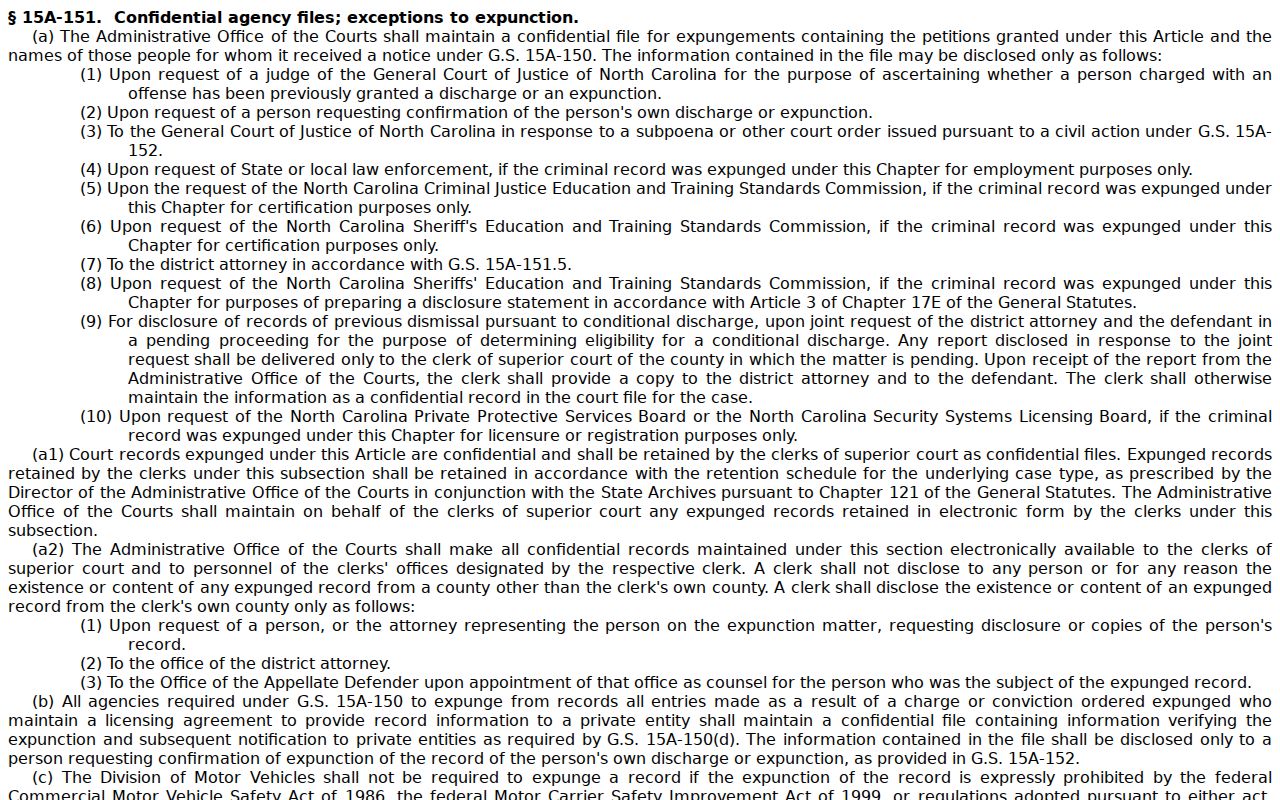
G.S. 7A-109 lets the public inspect clerk records and indexes during regular hours. That right stops where confidentiality laws or a sealing order begin. Portal flags sealed or confidential material as unavailable for ordinary viewing. Juvenile records are shielded by G.S. 7B-3000, and G.S. 15A-151 makes expunged files confidential.
Access limit: A missing criminal search result can reflect a restriction, but it can also reflect an incorrect identifier, a different court location, a recent entry, or no matching case. Repeated searches do not provide access to confidential material.
Portal masks some personal data before the public ever sees it. The user guide gives one example: a public date of birth shows only the year. The month and day stay hidden, so you can still narrow results. Masked data is not a puzzle to solve. Anyone with an authorized need for a restricted file must go through the Clerk. A court-authorized process works too. Reading between the lines of a docket search result gets you nothing.
Halifax County Criminal Clerk Records
Need the official criminal case file in Halifax County? Go to the Clerk of Superior Court. The courthouse sits at 357 Ferrell Lane in Halifax. The same office handles records for both Superior and District Court. Hours are Monday through Friday, 8:30 a.m. to 5:00 p.m. The phone number is (252) 593-3000. State guidance also points to public self-service terminals in clerk offices as another way to reach criminal case information. Keep Portal in mind too. Its public Case Summary is handy for spotting a case. Still, the Clerk keeps the real file behind it.
One more thing about what stays public. The expunged-record confidentiality statute governs what this Halifax County criminal docket view leaves out.
If the file is public, the Clerk can walk you through your options. Inspection, ordinary copies, and certified copies each have their own route. The staff explains them. Portal helps you identify the case in the Halifax County criminal docket. Treat it as a pointer, not an official copy. It also cannot get around any statutory limit on access.